
Silent Hill: Townfall Puzzle Tips and Hint Settings
Use Townfall’s reported puzzle-hint option, read environmental clues and investigate CRTV signals without opening a full puzzle solution.
Quick answer
Townfall has a puzzle-hint option: two September 21 reviews describe it, and Kyle Nicol reports enabling it in settings. Start with the room, the people connected to it, and the information the puzzle gives you. Screen Burn designed Townfall’s puzzles alongside the story, so their context matters. The CRTV can reveal helpful broadcasts, but there is no verified universal frequency or item-combination recipe here.
On this page
- Approach
- Observe and interpret
- Spoilers
- No solutions
Try puzzle hints before opening a full solution
September 21 reviews by Kyle Nicol and Jarren Navarrete independently describe puzzle hints. Nicol reports enabling them in settings. If you want help while keeping the answer undisclosed, inspect the hint option before looking up a walkthrough. These reports do not establish the complete difficulty menu, whether every puzzle changes, or any achievement and ending consequences.
Choose the amount of assistance you enjoy: try reading the room first, then use an in-game hint if the obstacle remains unclear. Keep combat difficulty separate from the question of how much puzzle guidance you want.
Identify the actual obstacle
Before searching for an answer, describe what prevents progress. A locked route, an unexplained object, and an unclear instruction are different problems. Write down the question the scene has raised rather than immediately guessing a code. This is a suggested solving method, not a claim that every puzzle uses a lock or a numerical answer. It helps keep an interesting detail from becoming an assumption you never test.
Read the surroundings as part of the clue
The developer’s June introduction links puzzles to the town and its inhabitants. A useful response is to consider who would use a room, what an instruction is referring to, and whether nearby information changes your first interpretation. Read the available material before treating an object as an isolated riddle. You may understand why an answer makes sense more easily once you understand the situation that produced the problem.
Separate observations from guesses
Keep a short note with two parts: what the game actually showed or said, and what you think it means. If an attempted answer fails, revisit the second part first. This avoids repeatedly applying the same assumption to a clue that never supported it. A small checklist can make that distinction concrete:
- Record the wording or visible detail that prompted the idea.
- Check whether the idea explains the whole instruction, rather than one convenient fragment.
- Change one assumption at a time so you can tell what the new attempt tests.
Investigate signals without ignoring the room
The February reveal establishes that CRTV broadcasts can assist with challenges. When a signal is involved, connect its information to the task in front of you. Do not assume every signal is a password or that the device removes the need to observe. For a blocked puzzle, the useful next question is whether you lack information, misread it, or are trying to use it in the wrong place.
Common questions
Are there confirmed item-combination recipes?
No recipes are established by the sources used for this introduction. Follow the interaction prompts on the relevant item rather than assuming a crafting system or a particular combination exists.
Does this guide contain puzzle answers?
No. It gives an observation and note-taking approach derived from the announced design. A specific solution would need its own puzzle evidence, including the surrounding conditions.
REFERENCE RECORD
Sources used for this page
Use the CRTV to investigate a signal when the environment alone leaves a question unanswered.
Related guides
Organ box puzzle
Open Zoe’s organ transport box with 956 and 133 after restoring electricity and reading the clues. Find the flashlight, power card and correct ET number.
Read guideFloppy disk puzzle
Repair disk 2 at the South Brae computer, load the three disks, print MANUAL.EML and use the barcode to reach Locker 17 and the Boltcutters.
Read guide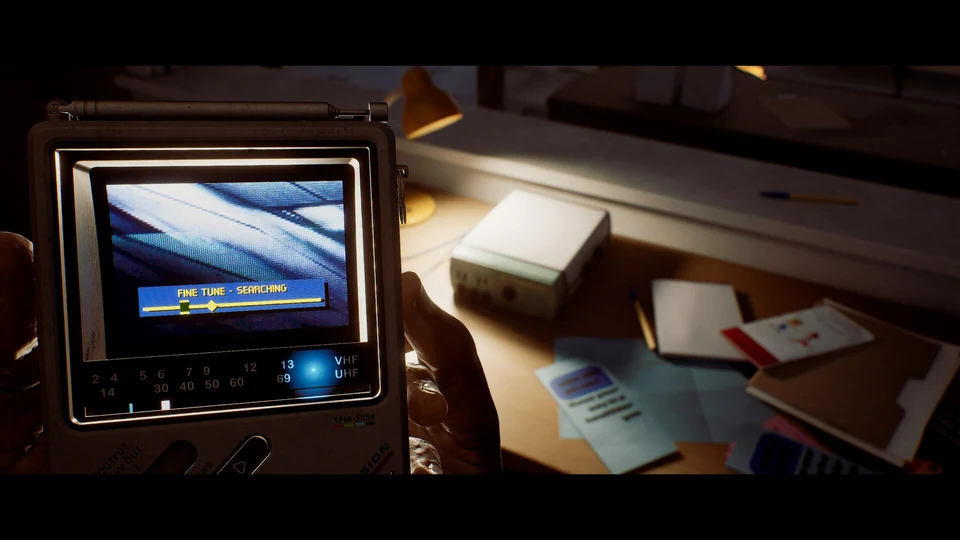
CRTV: signals and threats
Understand the device that receives broadcasts connected to the puzzles.
Read guide